Styling Tips to Flatter and Celebrate Your Curves
Dressing a curvy figure well isn’t about hiding anything — it’s about working with the shape you actually have instead of the one styling advice assumes you have. The right techniques highlight what you already love about your body instead of camouflaging it. Here’s how to actually do that.
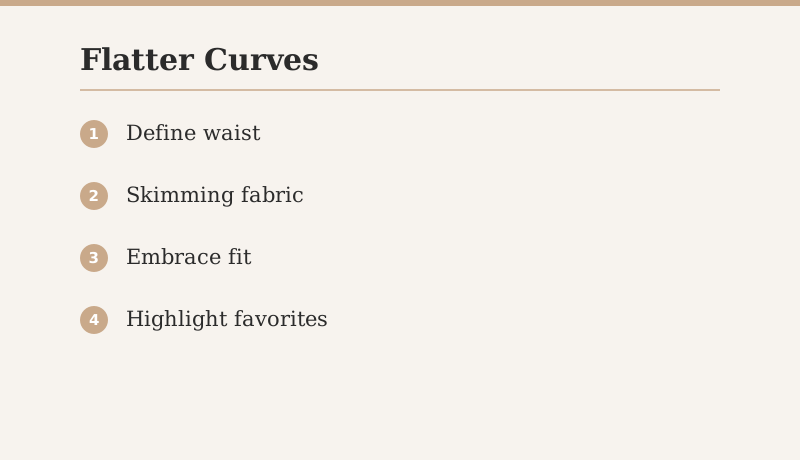
Quick Answer: The most flattering approach for curvy figures is defining your waist, choosing fabrics that skim rather than cling or hide, prioritizing fit over sizing up, and dressing to highlight your favorite features instead of minimizing them. Confidence comes from clothes that fit you, not from clothes that fit an idea of a smaller you.

How do you define your waist in an outfit?
Emphasizing the waist is the single most flattering move for a curvy figure. Wrap dresses, belted styles, and high-waisted bottoms all draw the eye to your narrowest point, working with your natural hourglass instead of hiding it. A defined waist creates visual balance in almost any outfit, from jeans to a formal dress. Even a simple $15 belt added over an oversized top can completely change the shape of the silhouette.

What fabrics are most flattering for curves?
Look for fabric with a little structure and drape — material that skims over curves instead of clinging tight or hanging like a tent. A good ponte knit, a structured cotton, or a fluid crepe all move with the body while still holding a shape. The two extremes to avoid are anything too clingy (which can highlight every seam of underwear and outline every movement) and anything too boxy (which hides your shape entirely instead of celebrating it). The sweet spot is fabric with just enough weight to fall cleanly.

Why does fit matter more than size?
Well-fitting clothes are the real foundation of confident curvy style, and this is the piece of advice worth repeating: don’t size up to hide. Sizing up to create extra room often adds bulk in the wrong places instead of removing it, while a piece that fits your fullest area — bust, hips, thighs — and gets tailored elsewhere looks dramatically more polished. A $20 tailoring visit to nip in a waist or hem a pant leg can transform an off-the-rack piece into something that looks custom-made.
What Nobody Tells You About Dressing Curves
A few things stylists know that don’t always make it into generic advice columns. First, one size doesn’t fit all curves the same way — two people can wear the same size and need completely different tailoring, so fit charts are a starting point, not gospel. Second, a fitted waist with a looser hem (like an A-line skirt or wide-leg pant) often flatters more than fitted head to toe, because it gives the eye a shape story to follow instead of one flat silhouette. And third: the “rules” about what curvy bodies should avoid are mostly outdated — stripes, prints, and bright colors all work fine when the fit is right.
How do you dress to highlight your favorite features?
Instead of dressing to minimize, dress to spotlight what you actually like. A great neckline to show off your shoulders, a fitted waist to show your shape, a hemline that highlights your legs — style that celebrates rather than conceals is what real confidence tends to look like in practice. Pick one or two features you genuinely love and build outfits that draw attention there, rather than trying to distract from everything at once.
FAQ
What’s the most flattering silhouette for curves?
A defined waist paired with a looser element somewhere else — like a fitted top with a flowy skirt, or a wrap dress that cinches at the waist — tends to flatter curvy figures well. The key is creating shape rather than either clinging everywhere or hiding everywhere.
Should you size up if clothes feel tight on curves?
Not usually. Sizing up to hide fullness often just adds fabric bulk in the wrong spots; a better approach is buying for your fullest area (bust, hips, or thighs) and having the rest tailored to fit. A good tailor is one of the best investments for curvy dressing.
What fabrics should curvy women avoid?
Very stiff, clingy synthetic fabrics with zero stretch or drape tend to be the least forgiving, since they hold a rigid shape instead of moving with the body. Fabrics with a bit of structure and give — ponte, ponte-blend knits, crepe — are generally more flattering and comfortable.
TL;DR:
- Define your waist with wrap dresses, belts, or high-waisted bottoms to create balance and highlight your natural shape.
- Choose fabrics with structure and drape that skim your curves rather than clinging or hiding them.
- Prioritize fit over sizing up — buy for your fullest area and tailor the rest for a polished look.
- Pair a fitted waist with a looser hem for a flattering shape story instead of fitted head to toe.
- Dress to highlight one or two favorite features (neckline, waist, legs) instead of trying to minimize everything.
- Confidence comes from clothes that fit the body you have, not from chasing rules meant for a different shape.
Keep Reading
This article is for general styling and informational purposes only. Trends, sizing, availability and pricing may vary by brand and season.